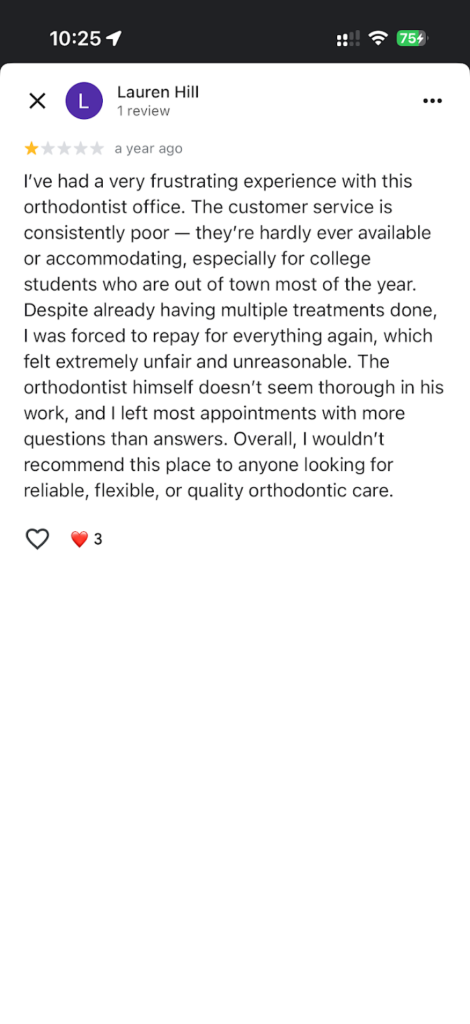
An Alabama orthodontist is coming under fire after a series of public customer reviews raised serious concerns about the way patients are allegedly treated after signing up for braces. The complaints, posted by parents and patients, paint a troubling picture of an orthodontic office where families say they paid thousands of dollars expecting attentive, doctor-led care, only to later feel ignored, rushed, or handed off to staff members they believed were not providing the level of professionalism they expected.
The criticism centers on Dr. Bennett and Bennett Orthodontics, where reviewers allege that the orthodontist may be highly visible during the sales or consultation stage, but far less involved once treatment begins. Multiple complaints suggest that patients rarely saw the doctor for meaningful periods of time, or saw him only briefly during appointments. That allegation strikes at the heart of orthodontic care. Braces are not a cosmetic impulse purchase; they are a long-term medical and dental treatment plan involving children, families, bite alignment, tooth movement, oral health, and thousands of dollars in financial commitment.
One of the strongest themes running through the complaints is the claim that families felt they were sold into expensive treatment and then left to rely heavily on staff for the actual hands-on work. Parents who bring their children to an orthodontist are not just buying brackets and wires. They are relying on a licensed professional to supervise treatment, evaluate progress, catch problems, and personally ensure that the plan is being carried out properly. When customers begin saying the doctor was barely present, the concern becomes larger than bad customer service. It becomes a question of trust.

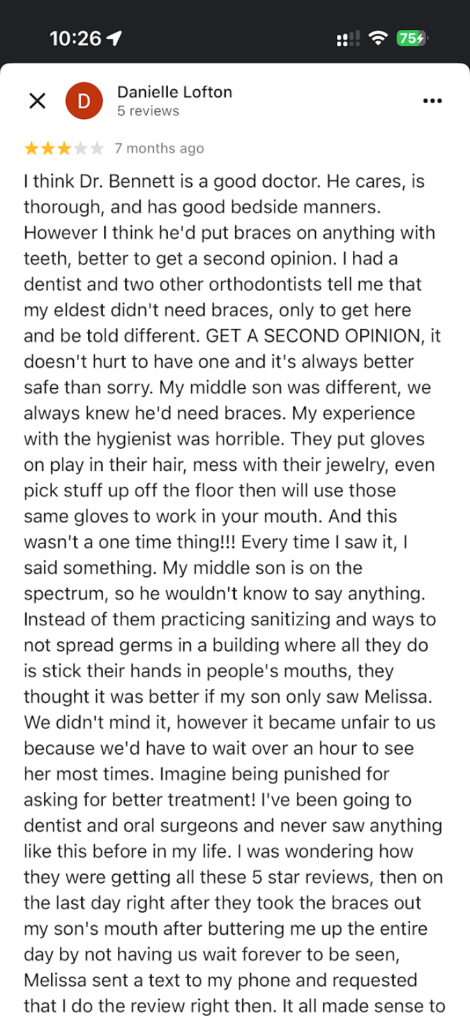
One reviewer warned others to “GET A SECOND OPINION,” stating that a dentist and two other orthodontists allegedly told her that one of her children did not need braces, only for Bennett Orthodontics to recommend otherwise. That kind of complaint is especially damaging because it suggests that some families may question whether treatment recommendations were always necessary or whether high-dollar contracts were being pushed too aggressively. The reviewer still described Dr. Bennett as caring and having good bedside manner, but the underlying warning was clear: kindness at the front end does not erase the need for careful, independent verification before agreeing to years of treatment.
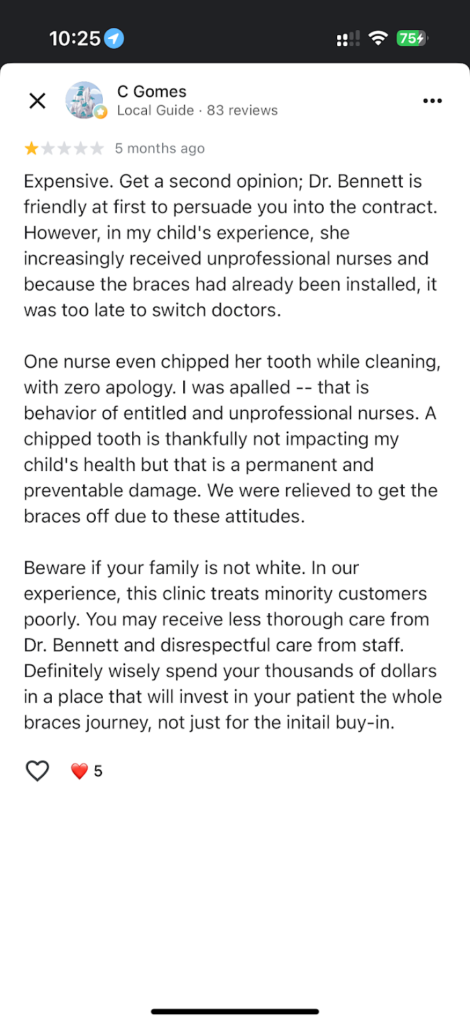
Another parent described the office as expensive and claimed that Dr. Bennett was friendly at first to persuade the family into a contract, but that the experience changed after braces were already installed. According to that review, the child later received care from staff the parent described as unprofessional. The same reviewer alleged that a staff member chipped the child’s tooth during cleaning and offered no apology. If accurate, that kind of allegation is not a minor scheduling complaint. A chipped tooth is permanent damage, and families have every right to expect transparency, accountability, and immediate concern when something goes wrong during dental or orthodontic care.
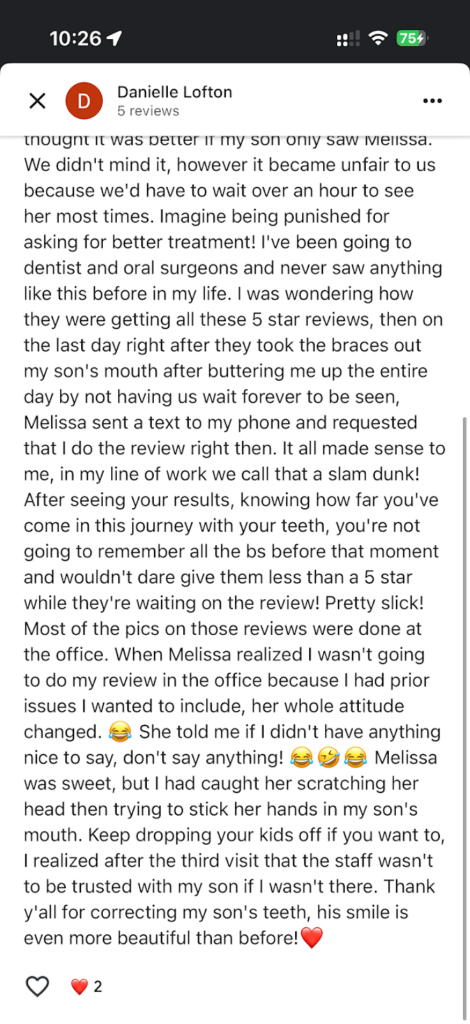
The sanitation-related allegations are also disturbing. One reviewer claimed that staff members handled their hair, touched jewelry, picked items up from the floor, and then used the same gloves inside a patient’s mouth. The reviewer said this was not a one-time issue and that she raised concerns repeatedly. In any dental setting, glove discipline and infection-control practices are basic expectations. Patients and parents should not have to police whether staff are maintaining sanitary procedures before putting their hands into someone’s mouth.
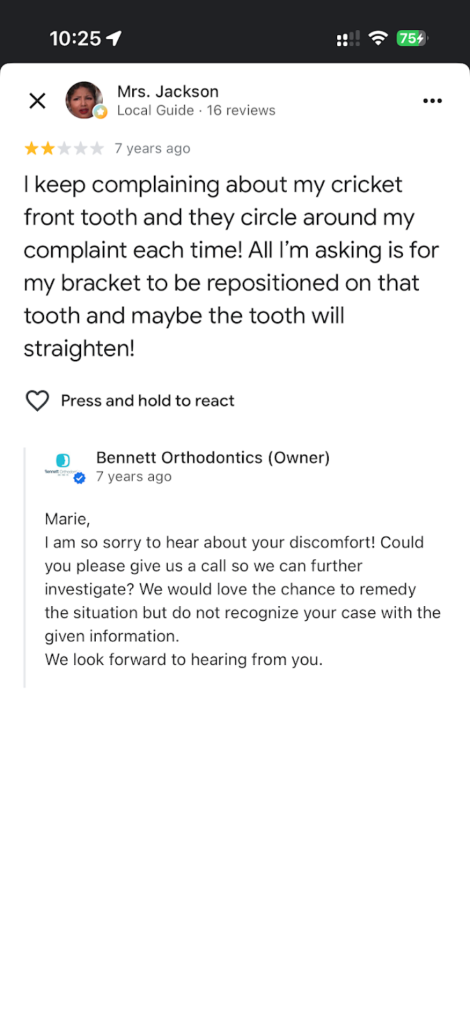
Another complaint came from a patient who said she repeatedly asked for a bracket to be repositioned on a front tooth, only to feel that her concern was brushed aside. Her review stated that the office “circle[d] around” the complaint each time. Bennett Orthodontics responded publicly, saying it was sorry to hear about the discomfort and wanted the patient to call so the office could investigate, while also saying it did not recognize the case from the information provided. That response may be standard customer-service language, but to frustrated patients, it can feel like another layer of deflection: a public apology without a public answer.
The complaints also raise concerns about the office’s online reputation. One parent questioned how the practice accumulated so many five-star reviews and alleged that, immediately after her child’s braces were removed, a staff member texted her asking her to leave a review right then. The parent suggested that asking for a review at the emotional high point, after the braces come off and the child sees the final smile, may pressure families into giving glowing feedback before fully weighing the months or years of frustration that came before. That allegation matters because online reviews are one of the main ways parents choose medical and dental providers. If review requests are timed in a way that captures excitement but suppresses criticism, the public picture may not reflect the full patient experience.

Another reviewer made an even broader allegation, claiming that minority customers may receive poorer treatment at the clinic. That is a serious claim and should not be treated lightly. It is also the kind of allegation that demands scrutiny, because families seeking medical or dental care should never have to wonder whether race or background affects the level of attention their child receives. The reviewer’s statement is an allegation based on her experience, but it adds to the larger pattern of customers saying they felt disrespected, dismissed, or treated differently after committing to treatment.
Taken together, the reviews describe a practice where some families felt the front-end sales experience did not match the long-term care experience. That is one of the most common and most serious complaints in high-cost health-related services: the provider is warm and persuasive before the contract is signed, but once the patient is financially committed, the attention allegedly fades. In orthodontics, that dynamic can be especially frustrating because families cannot easily walk away after braces are installed. Switching providers can be expensive, complicated, and disruptive. Parents may feel trapped, even when they are unhappy.
The financial pressure cannot be ignored. Orthodontic care often costs thousands of dollars, and parents frequently stretch budgets, finance treatment, or make monthly payments because they believe they are investing in their child’s health and confidence. When those same parents later say they waited more than an hour, barely saw the orthodontist, dealt with staff problems, or felt their concerns were ignored, the anger is understandable. They are not complaining about a cheap service or a one-time inconvenience. They are describing a long-term treatment relationship that they believe failed to meet basic expectations.
The most damaging part of these complaints is not any single review. It is the pattern. One person complains about rushed or insufficient doctor involvement. Another complains about staff professionalism. Another complains about sanitation. Another complains about being pressured for a review. Another complains about high prices and feeling trapped after braces were already placed. Another says a concern about bracket placement was repeatedly avoided. Each complaint may be disputed individually, but together they raise a question that prospective patients should take seriously: is this an office where the patient remains the priority after the contract is signed?
Bennett Orthodontics may deny these allegations, and online reviews alone do not prove misconduct. Any business can receive unfair reviews, exaggerated complaints, or one-sided criticism. But when the business is a healthcare provider working inside children’s mouths, the standard is higher. A pattern of complaints involving sanitation, rushed doctor oversight, staff conduct, alleged damage to a tooth, and perceived pressure to leave positive reviews deserves more than a canned response. It deserves direct answers.
Families considering treatment should ask pointed questions before signing anything. How often will Dr. Bennett personally examine the patient? How long does a typical doctor evaluation last? Who performs wire changes, adjustments, cleanings, scans, and bracket work? What training and credentials do those staff members have? What happens if a parent believes a bracket is misplaced? What is the process for reporting a sanitation concern? If a tooth is damaged during treatment, how is that handled? Can a family transfer care without being financially punished? Are reviews requested in the office, and if so, when?
Parents should also get a second opinion before agreeing to braces, especially if the need for treatment is not obvious or if another dentist has said braces may not be necessary. A second opinion is not an insult to any orthodontist. It is common sense. Orthodontic treatment can affect a child’s mouth for years and cost a family a substantial amount of money. No parent should feel rushed, pressured, or charmed into a contract without understanding whether the treatment is truly needed and who will actually be providing the care.

The public complaints against Bennett Orthodontics should serve as a warning to families across Alabama: do not judge an orthodontic practice solely by its smiling photos, polished marketing, or high review average. Read the negative reviews. Look for patterns. Ask whether the doctor is truly involved throughout the process or mainly present at the beginning. Pay attention to how the office responds when concerns are raised. A beautiful smile at the end of treatment does not excuse poor communication, questionable staff practices, or a patient experience that leaves families feeling ignored.
For an orthodontic office, trust is everything. Parents are handing over their children, their money, and their confidence that a licensed professional will provide careful care over months or years. If customers are saying they rarely saw the orthodontist, paid high prices, dealt with unprofessional staff, questioned sanitation, or felt pressured into positive reviews, those allegations deserve public attention. At minimum, they demand that prospective patients slow down, ask hard questions, and get another opinion before signing a contract they may later regret.