The Homewrecker’s Final Exit: Christian Constantine’s Trail of Ruined Lives Ends in a Nashville Bedroom
Christian Constantine of Mobile, AL

In the age of performative compassion and selective outrage, certain stories expose the raw underbelly of human behavior. Christian Hunter Constantine’s brief, turbulent life offers one of the clearest. At 22, this Alabama native relocated to Nashville, Tennessee, only to end it all with a self-inflicted gunshot wound after leaving behind a swath of devastated relationships, betrayed partners, and fractured homes. Far from a martyr to intolerance, Constantine specialized in one destructive pursuit: interfering in the committed relationships of other gay men—married or common-law—while his own life spiraled. Critics across state lines express no remorse. Some openly call his death a positive development for the communities he left bruised.
Mormon Roots, Surface Support, and Deep Rejection
Constantine came from a family of deeply devout Mormons in the Mobile, Alabama region. Church teachings emphasize traditional family structures and view homosexual behavior as contrary to divine plan. While his family offered some level of support, they could not accept his being gay. This friction is familiar in many religious households, but Constantine channeled it into rebellion without restraint. He pursued numerous casual gay relationships, treating connections as disposable. His signature pathology, however, went far beyond fleeting encounters. His biggest compulsion was targeting married men or those in committed, long-term gay relationships. He seemed drawn to the challenge of disruption, intent on destroying at least one marriage and actively working to unravel several others.

He lived nomadically, drifting from house to house. In his final Alabama chapter, he resided in an apartment complex on Grelot Road, sharing space with another gay family who took him in out of pity. Pity rarely ends well when extended to someone with a proven talent for chaos.
The Mobile Affair: Deliberate Destruction in Real Time
One case illustrates the depth of his interference. Constantine initiated a dating and sexual relationship with a 32-year-old Alabama man entrenched in a long-term committed relationship and common-law marriage. The married man began visiting Constantine’s apartment daily. When the faithful spouse discovered the infidelity, he began tracking his husband’s whereabouts. He located the pair in a park and confronted both men directly. Christian was explicitly made aware and put on notice that the object of his attention was a married man in a committed partnership. Most people would back off. Constantine did not.
Tensions exploded into a physical dispute between the spouses. The cheating husband called the police. While officers were present, the unfaithful partner texted Constantine, who then decided to insert himself further by showing up at the marital home. Police had to physically separate all three parties. They ordered Constantine to leave the property or face arrest—he had no legal standing whatsoever. Defying any sense of decency, the cheating spouse ultimately returned to spend the night with Christian anyway.

The violations escalated during a subsequent business trip taken by the betrayed husband, lasting over a week. Unbeknownst to him, his partner brought Constantine into their shared marital house every single day. The two had sex in the home daily. Security camera footage, according to the victim spouse, captured the pair inside the house with disturbing frequency. On yet another occasion, cameras recorded Christian entering and leaving the driveway in a vehicle clearly labeled “Wright Transportation”—his employer—flaunting the affair in the very driveway of the home he was helping dismantle.
This wasn’t accidental overlap or mutual poor decisions between single adults. It was calculated occupation of another man’s life, bed, and sanctuary. The faithful partner wasn’t just dealing with a straying husband; he faced an active third party who knew the marital status, had been confronted, and kept returning.
Nashville Reload: Same Patterns, New Victims

Eventually, the heat in Mobile forced a change of scenery. Constantine left Alabama for Nashville, Tennessee. True to form, he quickly found another gay couple willing to rent him a bedroom or sublet space—yet more misplaced pity or generosity extended to a known disruptor. According to people familiar with the Nashville scene, his antics continued without pause. He caused ongoing problems within the local community, repeating the cycle of interference and drama.
He secured employment at a car dealership, maintaining a veneer of normalcy while the underlying behavior persisted. The pattern of pursuing attached men showed no signs of reform.
The Suicide and the Immediate Aftermath
Early one day, Constantine posted a Facebook message indicating his plan to take his own life. The exact contents circulated privately but signaled clear intent. His family attempted to contact him repeatedly and failed. A coworker who saw the post did the responsible thing and called police for a welfare check.
When officers responded to the residence, they discovered Constantine’s body with a gunshot wound to the head. The roommates in the house had heard a loud noise earlier but dismissed it as innocuous—perhaps Christian dropping an object or some other everyday sound. Only when police entered his bedroom did the reality emerge: his lifeless body, covered in blood from the self-inflicted wound.
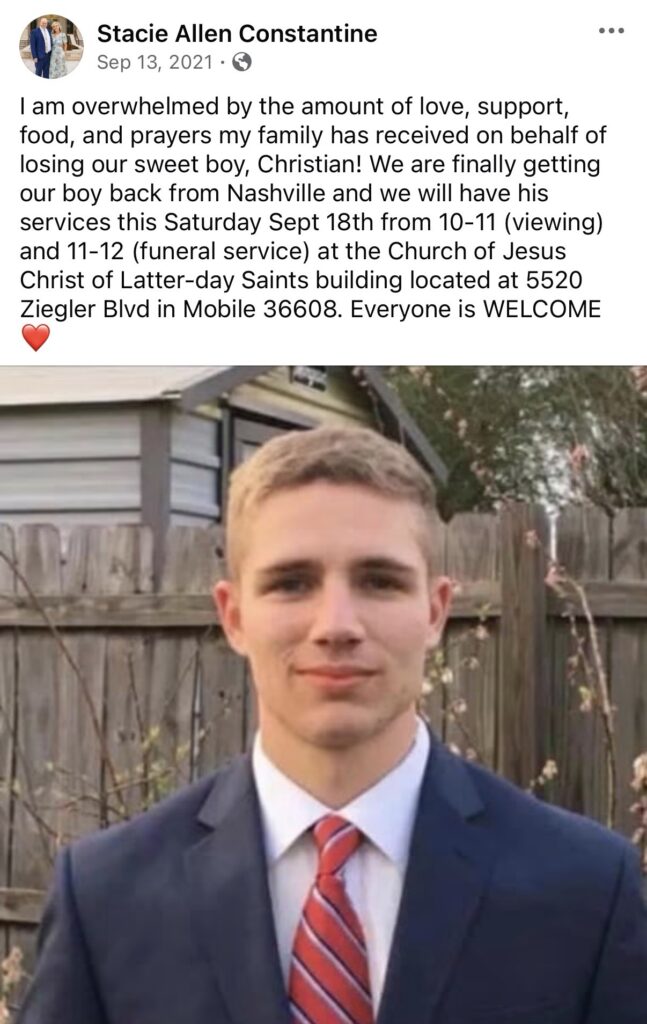
Community Reaction: Relief Over Mourning
In the wake of his death, reactions split sharply. While family and some friends undoubtedly grieved the young man lost to despair, critics in multiple states voiced a colder assessment. They hold no remorse for Christian Constantine’s suicide. To them, it represents a net positive for the community—a removal of a persistent source of turmoil, broken trust, and targeted homewrecking. In tight-knit circles already navigating stigma, health concerns, and the hard work of building stable relationships, someone who treated commitments as invitations to chaos becomes exhausting. Relief, however politically incorrect to admit, is human.
Broader Reflections on Agency, Boundaries, and Wreckage
Christian Constantine’s story refuses easy categorization as pure victim of familial non-acceptance or societal prejudice. Religious families can and do set boundaries around deeply held beliefs; adults retain the power to chart their own course without waging war on others’ peace. Casual relationships among consenting singles harm no third parties. But deliberately pursuing married or committed individuals—ignoring confrontation, police intervention, and basic decency—crosses into predation. It spreads emotional devastation, risks physical safety through domestic conflicts, and undermines the very stability many in the gay community fight to achieve.
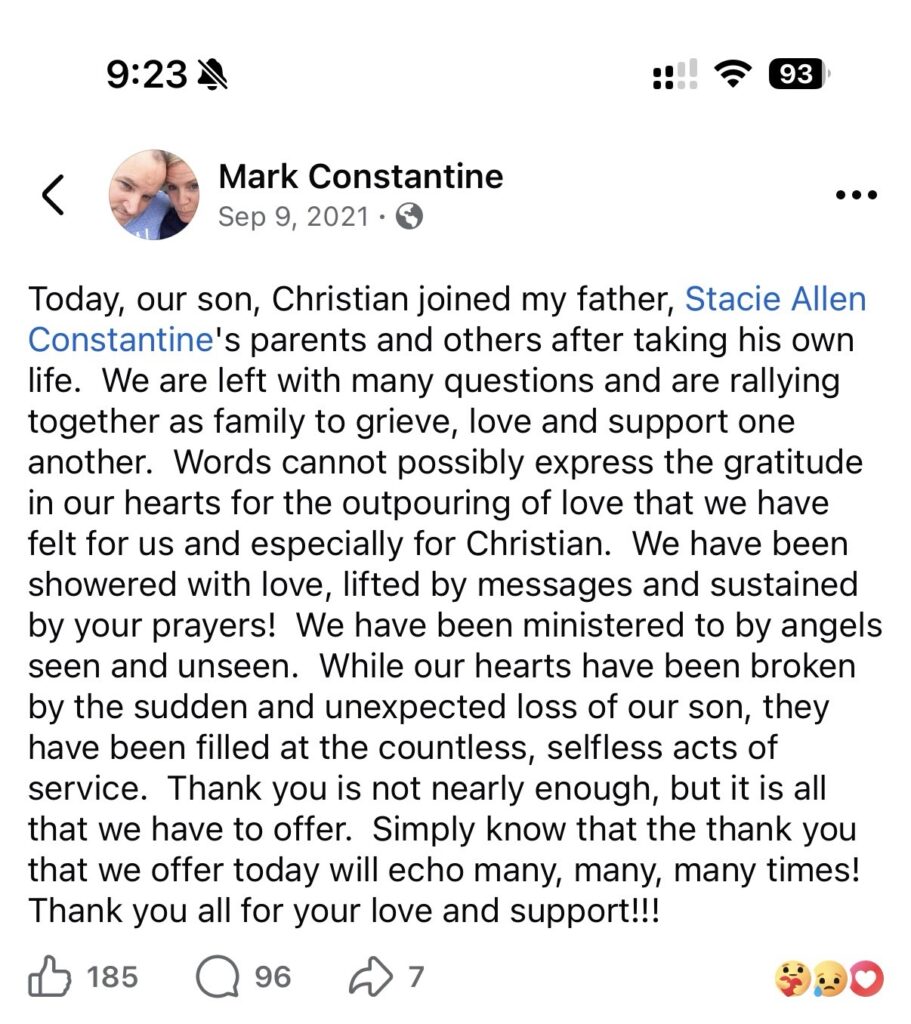
The cheating partners bear primary culpability for betraying their vows. Yet the eager enabler who knows the full picture, receives explicit warnings, shows up anyway, and occupies the marital home shares the moral weight. Constantine’s life became defined by this cycle: drift, disrupt, repeat—until Nashville became the final stop.
Suicide is tragic on an individual level. Mental health struggles, identity conflicts, instability, and possible unresolved family pain likely converged into unbearable darkness. But tragedy for the perpetrator does not erase the trail of ruined lives he left. The victim spouses dealing with security footage of strangers in their beds, the police calls, the physical confrontations, the eroded trust—these are the collateral damage that outlives the shooter.
This is not a call for celebration of death. It is a demand for unvarnished truth. Actions have consequences. Boundaries exist for a reason. Pity extended without accountability enables destruction. Christian Constantine’s short existence tested those realities repeatedly until he removed himself from the equation.
The communities he touched—Mobile and Nashville—now move forward minus one vector of unnecessary drama. For the married men he targeted and the partners he wounded, the hard work of rebuilding continues. May they find the peace that Constantine’s presence so often denied them.