
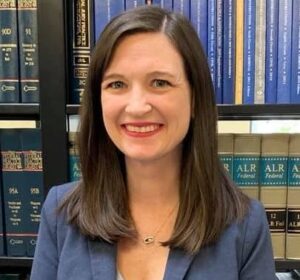
In the Mobile County justice system, where public trust is already frayed by repeated scandals, the Sheriff’s Office is far from the only institution under fire. At the center of a growing storm is former Assistant District Attorney Shelley Pope Corley, whose aggressive prosecution of local businessman and constable-related figures has unraveled amid explosive allegations of undisclosed conflicts of interest, personal vendettas, and blatant ethical breaches. Corley didn’t just pursue a case—she allegedly weaponized her office against a perceived business rival while smearing defendants and an entire class of public servants in open court.
Shelley Pope Corley left the Mobile County District Attorney’s office in July after her role in the high-profile Roberts case came under intense scrutiny. According to those familiar with the matter, the dismissal wasn’t a quiet retirement or routine reshuffling. It followed the discovery of a glaring conflict that Corley allegedly failed to disclose, allowing personal and financial interests to taint the scales of justice.
The Roberts Prosecution: Malice in the Courtroom
Doug Roberts, a local businessman whose firm operates in the competitive Information Technology sector, found himself in the crosshairs of Corley’s office. What should have been a routine matter escalated dramatically when Corley took the floor in open court. Witnesses and court observers describe her publicly maligning not only Roberts but painting all constables with a broad brush of suspicion and incompetence. Her statements went beyond zealous advocacy—they struck at the heart of Roberts‘ reputation and the integrity of law enforcement auxiliaries serving the community.
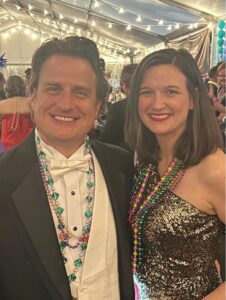
Roberts and his business colleagues had long suspected foul play. At the center of their suspicions: Corley’s husband, Terry Corley, who owns and operates an IT company that directly competes with Roberts‘ firm. This wasn’t some distant, tangential overlap. It was a head-to-head rivalry in a specialized market where contracts, clients, and reputations mean everything. Prosecuting the competitor’s principal while married to his business adversary raises red flags that any first-year ethics student would spot immediately.
Yet, according to sources close to the case, Corley pressed forward without recusal or disclosure. She continued attempts to prosecute Roberts even as the personal stakes became apparent. Only when the conflict was inevitably unearthed—through persistent inquiries by Roberts‘ team—did the house of cards collapse. The Mobile County DA’s office acted swiftly, dismissing her in July. But the damage to public confidence, and to Roberts himself, had already been done.
A Textbook Conflict of Interest—and a Failure to Recuse
Alabama’s Rules of Professional Conduct are crystal clear on conflicts. Lawyers, especially prosecutors wielding the awesome power of the state, must avoid even the appearance of impropriety. Personal financial interests, spousal business entanglements, and the potential for bias demand immediate disclosure and, typically, withdrawal from the case.
Corley allegedly did none of that. Instead, she allegedly pushed the prosecution, leveraging her position to malign Roberts in open court. This wasn’t mere oversight; if proven, it represents a profound betrayal of the public trust. Prosecutors are not private avengers—they are ministers of justice whose duty is to seek truth, not settle scores or protect family business interests.
Roberts’ colleagues voiced what many in the local business community quietly feared: that a personal grudge, funneled through the DA’s office, had turned the machinery of government against a competitor. In a small but competitive market like Mobile’s IT sector, the implications are chilling. If prosecutors can target rivals under the color of law, no business is safe.
Fallout and the Specter of Disbarment
The Alabama State Bar now looms large over Corley’s future. Ethics complaints and potential disbarment proceedings represent the ultimate accountability for officers of the court who abuse their authority. Dismissal from the DA’s office is a serious black mark, but disbarment would strip her of the ability to practice law anywhere—a fitting consequence if the allegations hold.
This scandal extends beyond one prosecutor. It casts a shadow over the entire Mobile County justice system at a time when residents already question whether the powerful are held to the same standards as everyone else. The Sheriff’s Office scandals mentioned in tandem with this case only amplify the perception of a system riddled with insiders protecting their own while targeting outsiders.
Hard-hitting questions remain unanswered. How many other cases did Corley handle while compromised? Were other defendants steamrolled by similar undisclosed biases? Why did it take external pressure from Roberts’ team to expose the conflict? And what safeguards failed to prevent a spousal business rivalry from infiltrating prosecutorial decisions?
In an era of declining trust in institutions, stories like this erode the foundation of the rule of law. Citizens expect prosecutors to be impartial arbiters, not extensions of personal or family enterprises. When that expectation is shattered—through public smears in court, failure to recuse, and continued pursuit despite conflicts—the response must be swift, transparent, and uncompromising.

The Roberts case is not merely about one man’s legal battle. It is a cautionary tale of what happens when personal interests infiltrate the prosecutor’s office. Shelley Pope Corley’s dismissal is a start, but full accountability demands a thorough investigation by the Alabama State Bar, potential disbarment, and systemic reforms to prevent recurrence.
Until then, the people of Mobile County and Alabama are left wondering: How deep does the rot go, and who else has been sacrificed on the altar of conflicted ambition? Justice delayed is justice denied—but justice corrupted is justice destroyed. The eyes of the community, and the Bar, are now firmly fixed on the outcome.