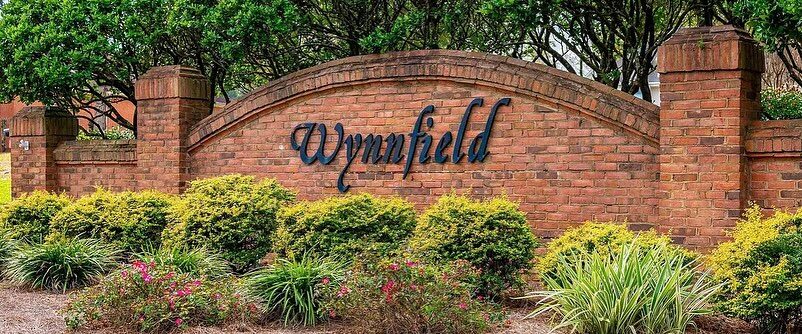
If you’re house-hunting in west Mobile, Alabama, and the Wynnfield subdivision off Cottage Hill Road has caught your eye, I want to share what my inbox has looked like for the last three years. I’m not writing this to scare anyone off — I live here. I’m writing it because when I was looking at this area, nobody told me what I’m about to tell you, and I think you should hear it before you put down earnest money.
In 2023, I subscribed to StreetScan, a third-party service that emails you whenever a 911 Call for Service is logged within a small radius of an address you specify. I plugged in my home address on Wynnridge Drive, in the 36695 ZIP code, and the alerts started arriving. They have not stopped.
Between mid-2023 and the time I’m writing this in May 2026, I have received well over 100 individual alerts. They cover the streets in and around the Wynnfield, Wynnridge, and Wynncliff subdivisions, the multifamily and commercial properties along Cottage Hill Road, and the apartment complexes lining the Schillinger Road and Sollie Road corridors that border this part of west Mobile.
That number alone deserves a moment of context. Calls for Service are not the same as confirmed crimes — a CFS is a 911 dispatch, and some of those calls turn out to be unfounded, duplicates, or get reclassified after officers arrive. But every one of those alerts represents a moment when somebody felt the situation was bad enough to dial 911, and a Mobile Police Department unit got dispatched to my neighborhood or one of the addresses immediately surrounding it. As a resident, that’s the data I have, and it’s the data anyone considering moving here ought to weigh.
What kinds of calls keep showing up
If I sort three years of alerts by call type, the breakdown is striking and consistent.
Domestic violence assault calls dominate. Roughly half of every alert I’ve received is tagged “Assault — Domestic Violence.” Some of these are isolated incidents at single-family homes, but a large share — and I mean a large share — come from the same handful of multi-unit addresses, where calls repeat month after month, sometimes week after week. There are stretches in early 2024 where I was getting domestic violence alerts from one specific apartment-style address every two to three weeks. Whatever is happening at those properties, it’s not getting better.
Property crime is the next-biggest category. Theft calls — both residential and commercial — make up roughly a quarter of the alerts. Burglary, including auto burglary and residential burglary, accounts for another sizable share. Stolen vehicle reports come in at about ten percent. Cars get stolen out of driveways here. Vehicles get broken into in apartment lots. Houses get hit when people are at work. Over three years I’ve seen burglary alerts at addresses on Mallard Drive, Lakewind Drive, Windcrest Drive, Wynncliff Drive, Sollie Road, Cottage Hill Road, Charleston Oaks Drive, Wellborne Drive, Cumberland Court, Isle of Palms Drive, and several more.
Violent assaults with weapons are rarer but not absent. In the period covered by my alerts, I received notifications for at least one shooting and at least one cutting (knife) assault, both at addresses within walking distance. They are statistical outliers in this dataset, but they happened, and they happened nearby.
The geography matters more than people realize
Here is the most important thing I can tell you, and the part that most online “Is this neighborhood safe?” articles will never explain: the call density is not uniform across this area.
The interior streets of the Wynnfield, Wynnridge, and Wynncliff subdivisions — the quiet residential lanes most buyers actually tour — generate relatively few calls. In three years, I can count the alerts inside the residential subdivision proper on one hand. If your only concern is “will my house get broken into the day I move in,” the data suggests interior single-family streets in this part of west Mobile are not dramatically more dangerous than other middle-class subdivisions in the metro.
The volume comes from the perimeter. Specifically:
- The Cottage Hill Road commercial corridor between Schillinger and the I-65 interchange is the single biggest source of alerts in my inbox. Hotels, extended-stay properties, restaurants, and shopping plazas along that stretch generate a steady stream of domestic violence, theft, and stolen vehicle calls.
- The Sollie Road corridor, particularly the apartment complexes near Cottage Hill, is the other concentration. One multi-unit property on Sollie alone has been responsible for dozens of calls during the period I’ve been monitoring — a mix of repeat domestic violence incidents, theft, burglary, and at least one weapon-involved assault.
- The Schillinger Road corridor to the west, along the Mobile/west-Mobile boundary, contributes a steady but lower volume — predominantly domestic violence and stolen vehicle reports.
- Across the city line into ZIP 36619, just south of here, alerts come in less often but include some of the more serious incidents I’ve seen.
If you buy a house deep inside Wynnfield, you are surrounded by these corridors on every side. You will drive through them on your commute. Your kids’ school bus will pass them. Your grocery runs to the Cottage Hill stores will put you in the middle of them. The interior is calmer than the borders, but the borders are right there.
What three years of alerts feels like as a resident
I want to be honest about the lived experience of subscribing to a service like this, because numbers on a page don’t quite convey it.
The alerts come in at all hours. Domestic violence calls cluster in the late evening, overnight, and early morning. Theft and burglary skew toward weekday daylight hours, which lines up with the pattern of houses being targeted while occupants are at work. Stolen vehicle alerts hit at every hour of the clock. There is no time of day when, statistically, this part of west Mobile goes quiet.
You start to recognize addresses. The same apartment-complex addresses appear over and over for domestic violence. The same hotel address on Cottage Hill appears repeatedly for both domestic disturbances and property crime. After a year or so you can almost predict which incoming alert will be from which location based on the call type and time of day.
You also notice the gaps in what these alerts don’t tell you. A CFS notification doesn’t tell you whether anyone got hurt, whether an arrest was made, whether the call was founded, or whether the situation was resolved. You see the dispatch and nothing else. So if anything, the alerts probably understate the most serious outcomes (because severity isn’t reported) and overstate the trivial ones (because every call counts equally).
What I’d want a buyer to know before they sign
If I were touring this area as a prospective buyer today, here is what I would want someone to tell me — the kind of practical guidance a real estate agent will not volunteer:
Tour the perimeter, not just the interior. Drive Cottage Hill Road between Schillinger and Sollie at 9:30 PM on a Friday. Drive the apartment complex frontages on Sollie Road at the same hour. Drive the commercial strip a mile east. Then drive the same routes at 7:00 AM on a weekday. The street has a different character at different times, and the picture you get on a sunny Saturday tour is not the picture you’ll live with.
Pull your own data. Do not rely on Zillow’s crime score. The City of Mobile publishes calls-for-service and incident data, and the Mobile Police Department posts crime maps. The Crime in Alabama annual report breaks down statistics at the agency level. You can also subscribe to StreetScan or a similar service for free for 30 days at the specific address you’re considering and see for yourself what shows up — that’s the most honest preview you’ll get.
Ask the seller and the HOA pointed questions. Has the property been broken into in the last three years? Have vehicles been stolen from the driveway or street? Does the HOA have an active relationship with MPD, and how often does an officer or community liaison come to meetings? What’s the lighting situation on the street at night? If the answers are vague or defensive, that itself is information.
Look at the multi-family properties around your target home, not just your target home. Two of the largest sources of calls in my data are multi-family/commercial addresses that are not visible from inside the subdivision but are five to ten minutes’ walk from many of the houses for sale right now. Their problems do not stay contained.
Plan your security from day one. If you do buy here, install a video doorbell and an exterior camera before you move in, not after. Get into the habit of locking vehicles every single night and never leaving a key fob in a car parked outside. Use deadbolts. Trim back any landscaping that creates concealment near windows. None of this is hypothetical advice — the burglary and auto-burglary patterns in my alert data show exactly the kind of opportunity-targeting these measures defeat.
Understand what kind of safety you’re buying. If your benchmark is “quiet, middle-class, single-family street,” much of the Wynnfield/Wynnridge area can deliver that on the inside of the subdivision. If your benchmark is “I want to never see a crime alert from my zip code,” this is not the area for you, and frankly very few zip codes in any American metro will meet that bar. The honest question isn’t “is this neighborhood safe?” — it’s “is the level of activity here something I’m willing to live with, given the price point and the school district and the commute?” That’s a calculation only you can make. But you should make it with the actual numbers in front of you, not with what the listing agent tells you.
A final word
Three years of alerts have not made me regret buying here. They have made me alert. I lock things. I pay attention. I know which streets to avoid at night. The interior of the subdivision is, in my honest assessment, livable and largely uneventful.
But I would have wanted to know, before I bought, that the area I was moving into sits inside a perimeter where 911 gets called more than 30 times a year just within the radius around my single address — and that a meaningful fraction of those calls involve violence, including in the last few months of data I’m sitting on as I write this. That’s the conversation no listing photo and no neighborhood marketing brochure is ever going to have with you.
Now you’ve had it.
Comments (3)
Comments are closed.