Federal Judge Refuses to Throw Out Civil Rights Case Against Mobile Police Captain Jack Dove
A federal judge denied most of the City of Mobile's motion to dismiss the civil rights lawsuit against Police Captain Jack Dove. Only three of ten counts were dismissed — and none of the claims against Dove himself.
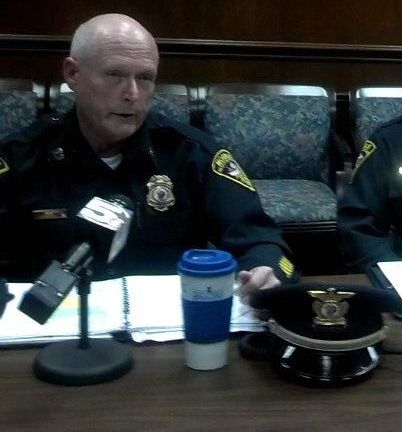
A federal judge has cleared the way for a sweeping civil rights lawsuit to proceed against the City of Mobile and one of its most controversial officers — veteran Police Captain Jack Emery Dove Jr. With that decision, the Jack Dove lawsuit moves out of the dismissal stage and toward full litigation, after the court rejected nearly all of the City’s effort to have the case thrown out.
In an order entered May 22, 2025, United States District Judge William H. Steele granted only a narrow portion of the City’s motion to dismiss, eliminating three of the lawsuit’s ten counts and a demand for punitive damages — but only as to the City itself. Every remaining claim survives, and, most importantly, the claims against Captain Dove personally were never even challenged in this motion. They remain entirely intact. The practical effect is unmistakable: the case is now headed into full litigation, and Captain Dove will have to answer in open court for the conduct alleged against him.

What the Court Actually Decided
It is worth stating plainly, because the result is both narrower and more consequential than a headline alone might suggest. The motion before Judge Steele was filed by the municipal defendant — the City of Mobile — not by Captain Dove. Dove, named in the suit as the individual defendant, did not move to dismiss the claims against him, and the court’s order leaves those claims wholly undisturbed.
When the dust settled, the scorecard read as follows:
- Dismissed as to the City only: Count Eight (malicious prosecution), Count Nine (abuse of process), and Count Ten (outrageous conduct), together with any demand for punitive damages against the City.
- Surviving against the City: the remaining seven counts, including procedural due process, unlawful search and seizure, free-speech retaliation, negligence and wantonness, negligent employment, trespass, and false arrest/false imprisonment.
- Surviving against Captain Dove: all ten counts. None were dismissed.
In the court’s own words, the City’s motion was granted as to Counts Eight, Nine, and Ten and as to punitive damages, and was denied in all other respects. In short, the City went to federal court hoping to shrink this case, and it walked away having barely moved the needle.
Who Is the Plaintiff — and How the Case Reached Federal Court
The lawsuit — Abdali Ali Issa v. City of Mobile, et al., Civil Action No. 1:25-cv-00106-WS-MU — was brought by Abdali Ali Issa, a Mobile County business owner who has operated a licensed automobile repair garage at his residence for years. The complaint was originally filed in Mobile County Circuit Court and was subsequently removed to the United States District Court for the Southern District of Alabama, where Judge Steele issued the dismissal ruling. The order itself acknowledges the case’s state-court origins, noting that the complaint was filed in state court, where the practice of naming fictitious defendants — here, members of Dove’s task force — is recognized.
This is a separate matter from the Wynnfield parking-and-towing saga that previously thrust Captain Dove into the public eye. But it tells a strikingly familiar story about the use, and alleged abuse, of municipal authority — and, according to the plaintiff, it is part of a much longer pattern.
The October 2023 Encounter at the Heart of the Lawsuit
According to the complaint, as summarized in the court’s order, the events at issue unfolded in October 2023, not long after a 2023 annexation brought Issa’s property — long operated as an auto repair business under county jurisdiction — within the City of Mobile’s limits. Following that annexation, the City stood up a municipal code-enforcement task force, headed by Captain Dove, charged with enforcing the City code in the newly annexed areas.
What allegedly followed is the basis for the suit. The complaint asserts that Dove and the task force entered Issa’s private property without a warrant or consent, and that a business which had been lawful for years under county jurisdiction was abruptly branded a “public nuisance.” The defendants are alleged to have opened vehicle doors, searched the vehicles, and affixed notice-of-violation stickers labeling them as junk cars, inoperable, and public nuisances. The affected vehicles — belonging to Issa and his sons — were, according to the complaint, fully operable, in good working order, and carrying current tags and registration.
When Issa questioned the officers’ authority, the complaint alleges, the encounter escalated quickly. Dove is said to have become verbally abusive and physically aggressive, to have knocked the phone out of Issa’s hand to stop him from recording, to have arrested and handcuffed him in front of his family, and to have ordered a warrantless search of his home, vehicles, and enclosed yard. In the course of the arrest, the complaint alleges, Dove injured Issa’s wrist — an injury said to have required medical treatment and to have interfered with his ability to work. The complaint further alleges that Dove mocked Issa’s national origin, threatened his dog, and relied on intimidation throughout.
Among the most striking elements of the complaint are the statements attributed to Dove during the encounter. According to the lawsuit, Dove allegedly declared that he was “the police” and “what I say goes,” remarked that “he who wears the gold shield calls the ball,” and dismissively asked whether “Mr. Iraqi Citizen” really believed he needed a lecture on the Constitution. The order references a related set of alleged remarks — including Dove’s claim to be “an expert in criminal and civil law” and a comment that the officers “could’ve busted in the door.” Judge Steele pointed to statements of this kind in concluding that Dove’s behavior was consistent with an individual sure of the rightness of his position — a point that proved pivotal to the legal analysis.

Arrest, Then “Unarrest”
In an unusual turn, the complaint alleges that Dove later reversed himself and released Issa, stating that he was doing so “out of the kindness of [his] heart” and describing the release as a “gift.” The legal consequences did not end there. The following day, according to the complaint, Dove swore out criminal charges against Issa, omitted key facts from his sworn statements, and asserted that body-camera footage existed — footage that, the lawsuit contends, did not actually capture the initial encounter. The order similarly recounts that Dove made false representations and omissions to the City magistrate, who relied on them in approving a charge that fell outside the magistrate’s jurisdiction. The City ultimately abandoned the matter, entering a nolle prosequi and dropping the charges.
It bears emphasis that these are allegations. At the motion-to-dismiss stage, a court must accept the complaint’s factual allegations as true and draw reasonable inferences in the plaintiff’s favor. The order does not establish that any of these events occurred as described; it holds only that, if proven, the allegations are legally sufficient to allow most of the case to proceed.
The Counts and the Battle Over Municipal Immunity
The lawsuit advances ten counts under both federal and state law: procedural due process, unlawful search and seizure, free-speech violations, negligence and wantonness, negligent employment, trespass, false arrest/false imprisonment, malicious prosecution, abuse of process, and outrageous conduct. The federal claims rest on the Fourth Amendment (unlawful search and seizure), the First Amendment (retaliation for filming the police), and the Fourteenth Amendment’s due-process guarantee, brought through the federal civil-rights statute, 42 U.S.C. § 1983.
The City’s narrow victory turned almost entirely on a single Alabama statute — Ala. Code § 11-47-190 — which shields municipalities from liability for the intentional, bad-faith, or malicious acts of their employees. Under that provision, a city can generally be held liable only when an injury results from the “neglect, carelessness, or unskillfulness” of an officer acting within the line of duty.
- Issa conceded that he could not pursue malicious prosecution (Count Eight) or the tort of outrage (Count Ten) against the City, because both are intentional torts barred by the statute.
- The court then held that abuse of process (Count Nine) was likewise barred, because malice is a required element of that claim — and the statute immunizes the City from liability for malicious conduct.
- By contrast, trespass (Count Six) and false arrest/false imprisonment (Count Seven) can each be pleaded so as to fit the “neglect, carelessness, or unskillfulness” exception, and the court allowed both to proceed against the City.
The City also argued that the complaint’s own allegations portrayed Dove’s conduct as so plainly intentional that no carelessness exception could apply. The court rejected that argument, reasoning that the very statements the City highlighted suggested an officer who sincerely believed he was entitled to act as he did — precisely the kind of mistaken-but-genuine belief that can trigger the exception rather than defeat it. The court further found that the City offered no legal authority for its narrow reading of what counts as a “deprivation” of property, and noted that the City had withdrawn its challenge to the underlying code-enforcement ordinance for the time being.
A Pattern the Plaintiff Says Goes Back Decades
The complaint does not treat the October 2023 encounter as an isolated event. It situates Dove within what it describes as a decades-long trail of complaints, internal discipline, and prior litigation — some of it reaching back nearly forty years. According to the lawsuit and the historical records it references, Dove has previously been accused of physically abusing individuals in custody, including claims involving beating and strangulation; of writing police reports containing racial slurs, which reportedly drew disciplinary action; and of fostering racially hostile conditions within the department. Despite that alleged history, the complaint contends, the City not only kept Dove on but elevated him — ultimately placing him in command of a code-enforcement task force aimed at newly annexed communities whose residents were often unfamiliar with city ordinances.
The complaint also draws a line to a separate dispute in which another plaintiff accused the City of dispatching Dove to his residence in retaliation for filing a lawsuit. In that matter, Dove is alleged to have issued questionable citations, ordered a vehicle towed, and arrested the plaintiff inside a courthouse hallway. That plaintiff reportedly characterized Dove as a “fixer” used by the City to intimidate adversaries — a description the current lawsuit revives.
The Case Against the City
Beyond Dove himself, the lawsuit takes direct aim at the City of Mobile, alleging negligent hiring, training, and supervision; a failure to act on a known history of misconduct; and a decision to bring Dove back after retirement despite prior incidents. The complaint’s theory is that the City was fully aware of Dove’s record yet continued to clothe him with authority over vulnerable residents — a theory that the surviving negligence and negligent-employment counts are designed to test. The federal claims against the City turn on whether a municipal policy or custom caused the alleged constitutional violations, and the court allowed that inquiry to move into discovery rather than cutting it off at the pleadings.
Community Fallout
The controversy surrounding Captain Dove has already generated significant public reaction in Mobile, amplified by earlier reporting tying him to a contentious arrest and a separate house-fire incident. Residents and advocates have voiced concerns about aggressive enforcement tactics, a perceived lack of oversight, and disparate treatment of minority communities. This ruling — which keeps the bulk of a federal civil-rights case alive — is likely to sharpen those concerns rather than quiet them.
What Happens Next
With the motion resolved, the litigation now advances into discovery, where the parties will exchange documents, take sworn depositions, and develop the factual record — including any dispute over the existence and contents of the body-camera footage referenced in the complaint. From there, the case could be resolved through settlement, narrowed at a later summary-judgment stage, or sent to a jury in the United States District Court for the Southern District of Alabama. Whatever path it takes, the central fact is now settled: a federal judge has examined the allegations, applied the law, and concluded that the overwhelming majority of this case deserves its day in court. The claims against Captain Jack Emery Dove Jr. are going forward — and, for now, every one of them remains on the table.



5 comments