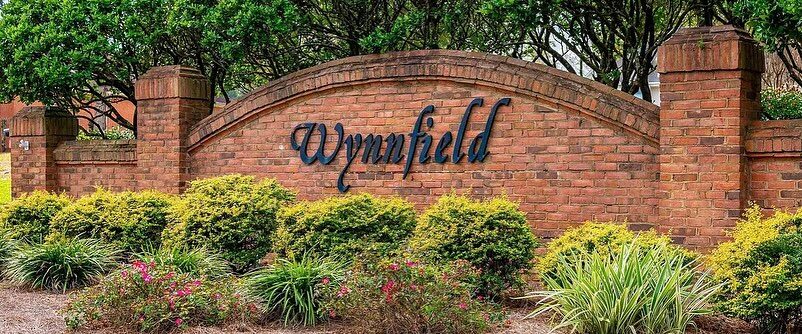
Every year, Wynnfield residents are told to brace themselves for the same routine: an annual “Parade of Homes” weekend that turns a quiet residential subdivision into a traffic funnel for tour buses, caravans of vehicles, and crowds of strangers walking the streets to view homes and land for sale.
In theory, events like this are meant to showcase growth, highlight new construction, and boost local real estate. In practice—at least in Wynnfield—many residents say it feels like their neighborhood is being temporarily converted into a public attraction without their consent, without meaningful protections, and without adequate respect for the people who actually live there.
And for a growing number of homeowners, the biggest frustration isn’t the concept of a home tour. It’s the way it’s handled: street access restricted, congestion pushed onto residents, and a sense that the HOA and event organizers treat Wynnfield as a venue first and a community second.
Roads “Shut Down” and Residents Boxed Out
Residents describe the same recurring disruption: for an entire weekend, normal access into the neighborhood becomes difficult—or, at times, effectively blocked—while tour buses and heavy vehicle traffic pour in.
Homeowners say the event creates gridlock and confusion, and residents trying to come and go are forced to navigate a maze of visitors who don’t know the streets, don’t know the rules, and are often focused on finding the next model home rather than watching for kids, pets, or local traffic.
It’s not just inconvenient. Many residents view it as fundamentally unfair. People pay to live in Wynnfield. They pay HOA dues. Yet one weekend a year they’re treated like background noise in their own neighborhood.
The Incident That Crossed a Line: An Officer Outside His Jurisdiction
This year, residents say the situation escalated beyond “annoying” into something more serious: a Saraland police officer—outside his jurisdiction—was posted at the entrance of the neighborhood and was stopping residents from entering.
From the perspective of homeowners, that’s not just bad optics. It raises real questions.
-
Who authorized it?
-
Under what legal authority was a non-local officer directing traffic at a Mobile neighborhood entrance?
-
Were residents actually denied access, or were they simply delayed and pressured to turn around?
-
Was Mobile Police, the City of Mobile, or any appropriate agency involved in planning, supervision, and accountability?
Even if the intent was “traffic control,” the result, residents say, was the same: people who live there felt treated like outsiders. And for many, the idea of being stopped at the entrance to your own street—by an officer not even from your city—felt like a line that should never be crossed.
A Weekend Event That Creates Long-Term Resentment
Supporters of the event might argue it’s only temporary—just a couple of days. But that’s exactly the point residents keep making: if it’s “only a couple of days,” why has it caused the same conflict for decades?
Homeowners say this has been happening for more than 25 years. That means entire generations of residents have dealt with the same frustration: the same weekend disruption, the same traffic surge, the same feeling that the neighborhood’s day-to-day life is considered less important than marketing and sales.
Over time, what might have been tolerable once becomes a symbol of a deeper complaint: a perception that decisions are made to residents, not with them.
The HOA’s Role: Who Is the HOA Actually Serving?
A homeowners association is supposed to protect the interests of homeowners—preserving quality of life, safety, and property values. But residents critical of Wynnfield’s HOA argue that the Parade of Homes weekend flips that mission on its head.
Instead of prioritizing the people who live in the neighborhood, the HOA appears—at least to its critics—to prioritize outside stakeholders: developers, event planners, and prospective buyers.
Residents say the HOA should be asking hard questions before allowing any event that affects access and safety:
-
Will residents have uninterrupted entry and exit at all times?
-
Will emergency access be protected with clear, written procedures?
-
Will traffic control be handled by the proper local authority?
-
Will homeowners receive clear notice—weeks in advance—about closures, routes, and restrictions?
-
Will there be a plan for pedestrian safety, parking overflow, and property respect?
-
Will there be accountability for misconduct, damage, or unsafe traffic practices?
If the answer to any of those is unclear, residents argue, the event shouldn’t happen in a residential neighborhood in the first place.
Safety and Liability Aren’t Small Issues
Crowds, tour buses, and heavy traffic inside a neighborhood create risk. That risk isn’t theoretical. It’s practical:
-
children playing near streets
-
pets and pedestrians crossing between parked cars
-
distracted drivers looking for signs or model homes
-
blocked driveways and narrowed lanes
-
delayed emergency response if congestion isn’t managed correctly
Residents say they don’t want to wait until an accident happens before the HOA acknowledges that this isn’t just an “event,” it’s an operational disruption with real consequences.
And when residents hear that an out-of-jurisdiction officer was involved, they worry even more—not only about fairness, but about liability and oversight. When something goes wrong, people want to know: who was responsible, and who had authority?
“This Needs to Stop” — What Residents Want Instead
Many residents aren’t asking for minor tweaks. They’re asking for a fundamental change.
Some want the Parade of Homes moved to communities designed to handle it—new development areas with multiple access points, wider roads, dedicated event parking, or controlled staging areas that don’t disrupt existing residents.
Others say: if the event must happen in Wynnfield, then it should come with non-negotiable rules:
-
no blocking residents from entering or leaving
-
no road “closures” that treat public streets like private event space
-
traffic control only by the proper local authority, with clear oversight
-
dedicated shuttle staging outside the neighborhood, not inside it
-
strict limitations on bus traffic and crowd volume
-
clear homeowner notice, clear signage, and a real emergency access plan
Above all, residents want the HOA to act like a homeowners association—not an event coordinator.
A Neighborhood Is Not a Showroom
Wynnfield isn’t a convention center. It isn’t a sales lot. It’s where people live.
For homeowners who are tired of this annual disruption, the message is simple: a “Parade of Homes” should not come at the cost of residents’ access, safety, and dignity. And if it has been creating the same tension for more than 25 years, then it’s not a one-time inconvenience—it’s a long-running failure of judgment and governance.
Residents are no longer impressed by the idea that this is “good exposure.” They want the HOA to respect the fact that Wynnfield is a community first—and a marketing opportunity second.
And they want this tradition—at least in its current form—to end.
Related Articles
- Neglected and Unsafe: Wynnfield Residents Raise Alarms Over HOA’s Abandoned Ponds
- Can Anything Be Done About Wynnfield’s HOA? Homeowners Ask What Options Remain
- When Trust Is Broken: How Wynnfield HOA Became a Symbol of Why People Distrust Homeowners Associations
- Understanding HOA Proxy Voting: What Wynnfield Residents Need to Know
- When Personal Vendettas Take Over: Why HOAs Must Never Become Weapons Against Homeowners
- There Isn’t a “New Nationwide HOA Law” in 2026 — But the Reform Wave Is Real (and Why Alabama Homeowners Still Feel Stuck)
- Wynnfield HOA President Accused of Coordinating With Authorities to Have Resident Arrested
- The Troubling State of the Wynnfield HOA: Resident Concerns, Leadership Issues, and Neighborhood Decline
- Interview with Doug Roberts: A Resident of Wynnfield Discussing His Ordeal with the Homeowners Association
- Wynnfield HOA Leadership Accused of Submitting False Reports and Harassment Over Vehicle Parking Dispute
Related posts:
- Vehicles Stolen in Wynnfield
- Wynnfield’s Halloween Has Turned Into a Regional Destination—And Residents Say It’s Becoming a Problem
- Can Anything Be Done About Wynnfield’s HOA? Homeowners Ask What Options Remain
- There Isn’t a “New Nationwide HOA Law” in 2026 — But the Reform Wave Is Real (and Why Alabama Homeowners Still Feel Stuck)